How did one Rust player farm 20 million cloth in a single wipe?
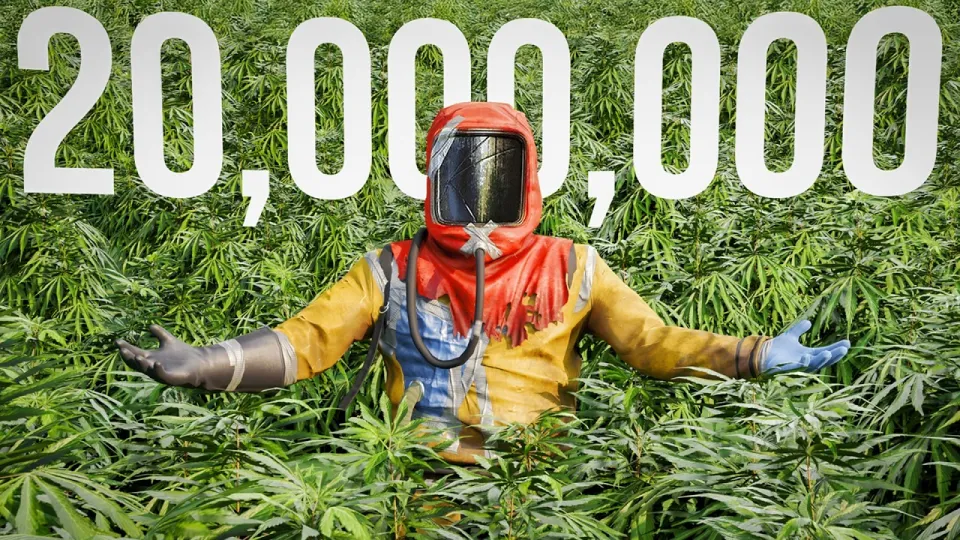
Video: I Became Rust's #1 Farmer...
Need articles like this for your video? They help promote it on YouTube and Google — order them in the Telegram bot @sat_sit_bot. It writes articles around your video, embeds the video and publishes them on popular niche websites (no ads). Free trial — 50 articles.
· based on the channel JTeles
Key takeaways
- JTeles started the wipe with 126,000 cloth and set a goal of 20,000,000 cloth within 7 days.
- Viewers were invited onto the server to help build what the video calls the biggest cloth farm in Rust.
- A large Russian clan found out about the project and tried to stop it, leading to PvP, raids and base defense.
- The finished compound grew so large that rendering it reportedly caused server lag.
- Clanmates defended the base and kept farming while the creator was offline.
Farming 20,000,000 cloth in a single Rust wipe is possible, but only as a group project: JTeles started with 126,000 cloth, invited viewers onto the server, built what the video calls the biggest cloth farm in Rust and pushed toward the 20 million target across 7 days while a rival clan tried to shut the operation down. The run is documented in the JTeles video "I Became Rust's #1 Farmer...", and anyone who wants to follow similar survival builds can start with the free War Thunder sign-up bonus promoted alongside the upload.
What the 20 million cloth challenge actually involved
The core of the challenge is scale, not skill: cloth is one of Rust's most common resources, and the goal was to accumulate 20,000,000 units of it in one wipe cycle rather than to win fights. The starting stock was 126,000 cloth, which is roughly what a solo player can pull from a few hours of hemp picking, so the target represented a jump of more than 150 times the initial amount. To get there, the creator opened the server to viewers and turned the project into a collective farm rather than a solo grind, with a deadline of 7 days before the wipe reset everything. The video frames the result as a bid to be Rust's number one farmer, which in practice means out-producing every other player and clan on the server.
Why the biggest cloth farm in Rust became a war target
A farm of that size cannot stay hidden, and the video describes a massive Russian clan discovering the project and doing everything it could to stop it. On a busy Rust server, a compound full of planter boxes, hemp and storage is a visible signal of wealth, and large groups routinely raid farms for resources, tools and loot. The response in the video was a mix of open PvP, raids, base defense, continued farming and alliances with other players, which turned a farming run into a server-wide conflict. That dynamic is normal for Rust: the more efficiently a group produces, the more attention it attracts, and the defense of the base becomes as important as the harvest itself.
How the farm was built and defended
Building a cloth operation at this scale follows a recognizable pattern that any Rust group can copy, even if the numbers are smaller:
- Secure a base location with room for a large footprint, since planter boxes and hemp need floor space and light.
- Stack planters and grow lights so the harvest can be collected in bulk instead of plant by plant.
- Assign roles: some players farm hemp and cloth, others craft, cook and run defense.
- Keep storage organized so large cloth stacks can be moved and counted quickly toward the goal.
- Maintain a night shift or offline coverage, because raids often land when the owners are asleep.
The video credits clanmates with holding the base while the creator was offline, and viewers noticed the compound had grown so large that looking at it caused server lag. That lag is a real constraint on mega-farms: the more entities and lights in one area, the harder the server works, and the more likely the build becomes a target for both raiders and performance complaints.
What viewers asked about the farm run
The most common reactions to the video centered on the sheer size of the goal, the loyalty of the clan and the practical details of running such a farm. Several viewers compared the effort to older manual farming methods, recalling builds of around a thousand planters that had to be planted and harvested one plant at a time before quality-of-life updates, taking hours per cycle and producing roughly 17 million cloth. Others asked how the base held together while the owner slept, which the video answers with clan defense and organized offline coverage. There were also jokes about the creator's absence from YouTube and about how long the footage would have run in other hands, but the practical takeaway is that cloth farming in Rust scales with manpower and organization far more than with individual playtime. A viewer with a large planter setup on a modded server confirmed the same thing: the harvest is fast, but the lag and the logistics are the real work.
How long a 20 million cloth push takes
The stated window is 7 days, one full wipe, and the schedule is dictated by growth time and player availability rather than by the clock. Hemp grows on a fixed cycle, so a large planter array produces a steady stream of cloth as long as someone is there to harvest and replant, which is why the project depended on viewers joining the server. Reaching 20 million means harvesting continuously across the wipe, processing the cloth into useful items or storing it, and defending the stock from raids that would erase progress in minutes. The video's structure reflects that rhythm: farming segments, PvP interruptions, base defense and alliance negotiations, all compressed into a single wipe's lifespan.
All links from the video
- Free War Thunder bonus for PC and consoles
- War Thunder mobile link
- JTeles Discord community
- JTeles on Twitter/X
- JTeles on TikTok
The bottom line on Rust's cloth farming race
JTeles turned a simple resource goal into a server-wide event by starting at 126,000 cloth and chasing 20,000,000 in 7 days with viewer help. The biggest cloth farm in Rust attracted a determined rival clan, and the resulting PvP, raids, alliances and offline defense are what make the run worth watching. The lesson for regular players is that Rust rewards coordination: planter layout, role assignment and night coverage matter more than raw hours. If you want to see how the push ended, the full breakdown is on the JTeles channel, and the War Thunder registration bonus linked in the video is the same offer the creator promoted during the run.
Source: I Became Rust's #1 Farmer... · Markdown version
Questions & answers
How much cloth do you need to become Rust's #1 farmer?
In the JTeles challenge the target was 20,000,000 cloth in a single wipe, starting from 126,000 cloth. That figure is far beyond what a solo player gathers in a normal wipe, so the run relied on viewer volunteers and a large planter farm. There is no official leaderboard number, but 20 million is an extreme benchmark for a 7-day cycle.
Can a solo player build a cloth farm that big?
Practically, no. A 20 million cloth goal requires hundreds of planters, constant harvesting and replanting, and round-the-clock defense against raids. Solo players can run a few dozen planters and earn a solid cloth income, but the mega-farm scale in the video depended on a clan and viewer support.
Why do big farms get raided so often in Rust?
A large farm is a visible sign of resources, and raiders know it holds cloth, tools, fuel and crafted items. In the video a large clan targeted the farm specifically to stop the project, which is typical behavior on populated servers. Defense, alliances and offline coverage are the usual countermeasures.
Does a huge planter farm cause lag in Rust?
Yes, large numbers of planters, grow lights and entities in one area increase server load. Viewers noted that looking at the finished compound in the video caused lag, and players who built thousand-planter farms have reported similar problems. Spreading the farm across several bases helps reduce the impact.